The development of new energy infrastructures in Europe poses a clear challenge: to build more efficient, safer and more sustainable networks without increasing the impact on the surface.
The need to transport energy from one point to another – particularly from renewable sources – is driving the execution of increasingly complex projects, both from a technical and environmental perspective.
In this context, HDD – Horizontal Directional Drilling – has established itself as an essential solution for carrying out underground installations in sustainable environments, with the main objective of minimising impact, ensuring the continuity of existing infrastructure, and enabling the development of new networks.
Beyond technology: the challenge on site
Each project, whether in the energy sector or any other type of installation, presents unique conditions that go far beyond the drilling works themselves.
Among the main challenges are:
- Crossings of roads, railways and motorways
- Interference with existing services: water, gas, telecommunications
- Environmentally protected areas
- Presence of rivers, aquifers or unstable ground
- Variable geological conditions along the route
These factors require a comprehensive approach in which engineering, planning and execution must be fully aligned throughout the entire construction process.
HDD technology is not only a construction technique, but a discipline that requires a high level of specialisation and the ability to adapt in real time.
The strategic role of HDD technology in energy infrastructure
The use of trenchless technology is becoming increasingly common, regardless of the scale of the project. It is no longer an alternative, but a necessity.
Horizontal Directional Drilling makes it possible to address one of the most critical challenges in this type of infrastructure: singular or highly complex crossings, where excavation using traditional trenching methods is not feasible.
Thanks to this technology, it is possible to:
✅ Carry out crossings without affecting traffic or surface activity
✅ Significantly reduce environmental impact
✅ Preserve ecosystems and protected environments
✅ Ensure the safety of existing infrastructure
✅ Maintain the continuity of essential services
This system is particularly relevant in projects linked to the energy transition, where sustainability is a key criterion from the design phase through to execution.
The Catalana Drilling® approach
At Catalana Drilling, we understand each drilling operation as an integrated process in which every phase is crucial to the success of the project.
Our approach is based on the combination of engineering, operational experience and continuous control:
🔍 Preliminary study and design
Detailed ground analysis, route definition and risk assessment to anticipate potential issues.
⚙️ Equipment and methodology selection
Adaptation of equipment and techniques to the specific conditions of each project, optimising performance and precision.
📊 Real-time control and monitoring
Continuous monitoring during execution to ensure minimal deviation and a rapid response to any changes.
🔄 Continuous optimisation
Ability to make adjustments during drilling to adapt to actual ground conditions and maximise efficiency.
This approach allows us to ensure high standards of quality, safety and compliance in technically demanding projects.
Key factors for success in HDD
With more than 55 years of experience in the sector, we know that the success of each operation does not depend solely on the machine, but on the combination of multiple factors:
- Prior knowledge of the ground
- Precision in the design of the drilling route
- Coordination between engineering and execution
- A multidisciplinary team on site
- Real-time decision-making capability
The integration of all these elements is what makes the difference and what positions Catalana Drilling® as one of the pioneering companies in HDD.
Success case: SuedOstLink Project
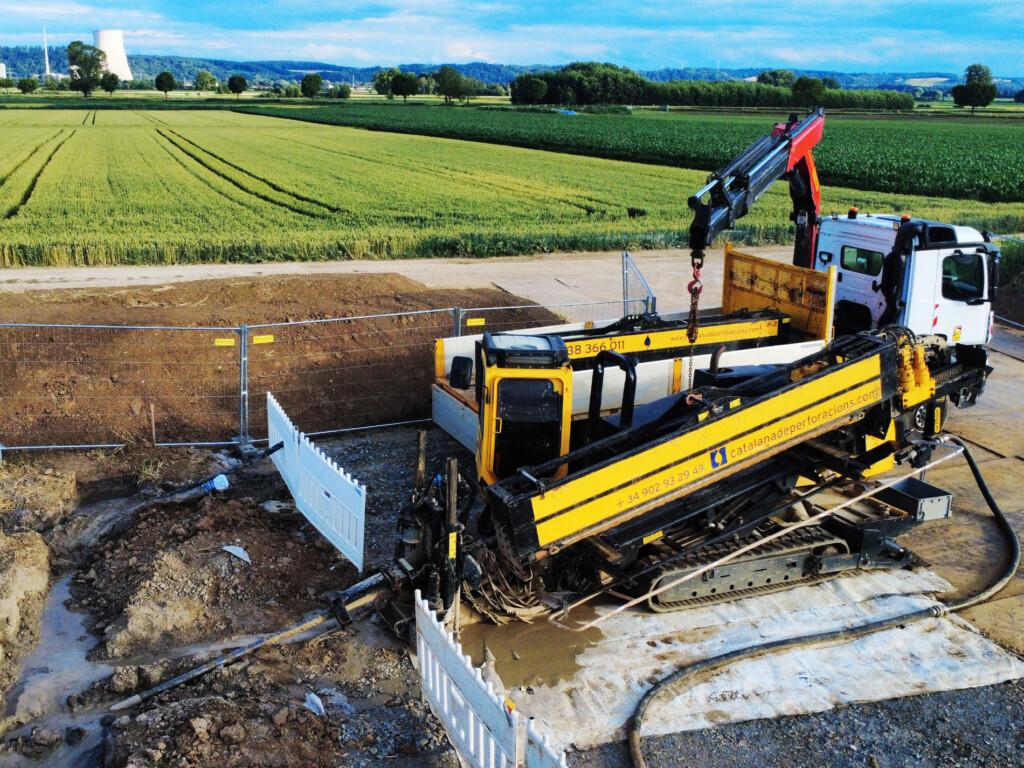
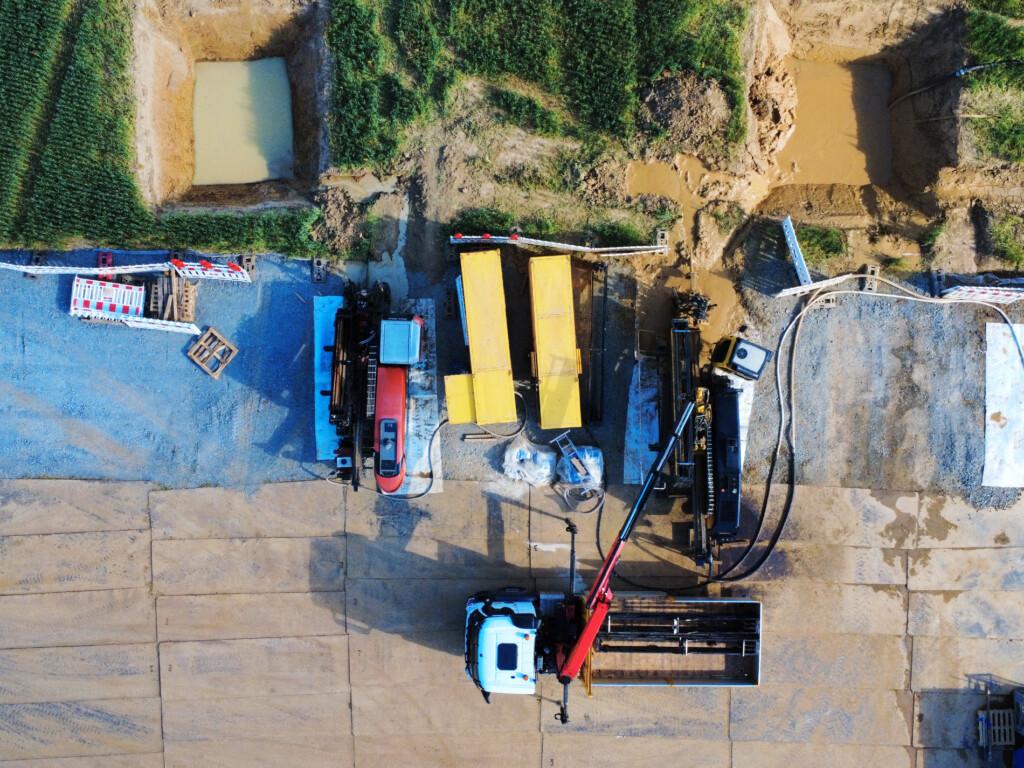
Between November 2024 and October 2025, we took part in one of the most significant energy projects in southern Germany, SuedOstLink.
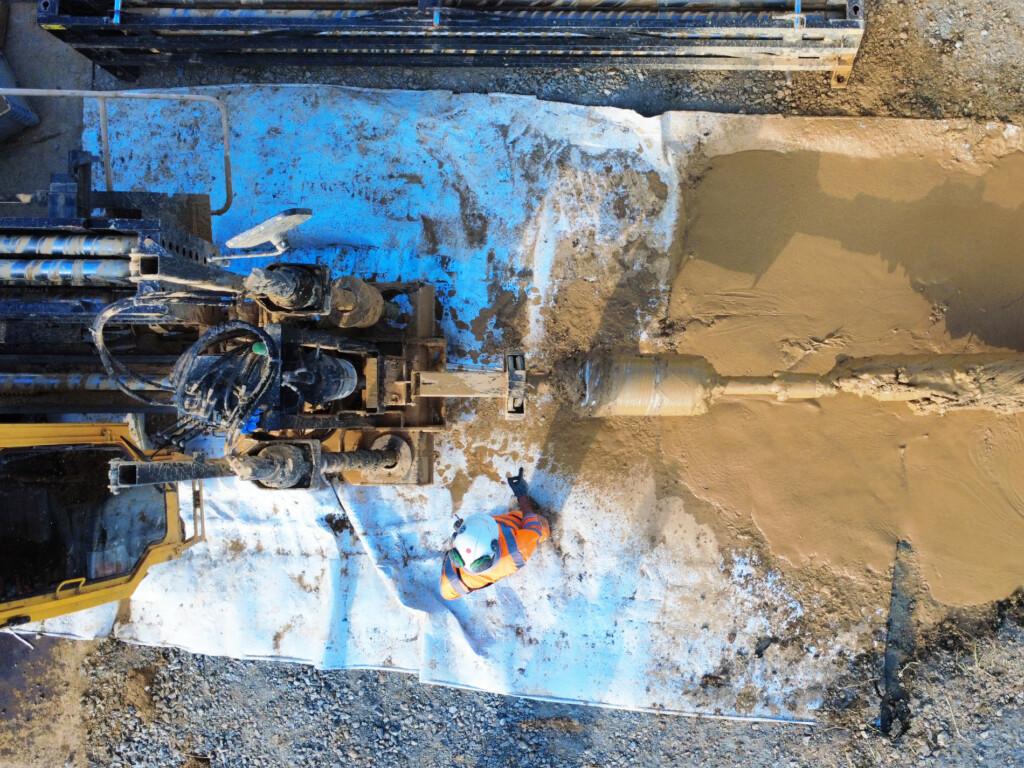
Using HDD technology, we completed a total of 54 drillings across 9 crossings, with a total length of 5,144 m, culminating in the installation of 14 pipes: 8 x 50 mm, 2 x 140 mm and 4 x 288 mm, combined according to the structural requirements of each section.
This is a strategic infrastructure project aimed at improving the transport of renewable energy from the north to the south of the country and vice versa.
With projects like this, we demonstrate our commitment to large-scale developments, where technical challenges are part of everyday work and experience plays a fundamental role.
A look towards a more sustainable future
The growth of energy networks in Europe will continue to drive the need for more efficient, sustainable construction solutions adapted to complex environments.
In this context, horizontal directional drilling will continue to play a key role, not only as a technology but as a strategic tool for the development of resilient infrastructure.
Specialisation, innovation and experience will be decisive factors in addressing the challenges of a sector undergoing significant transformation.